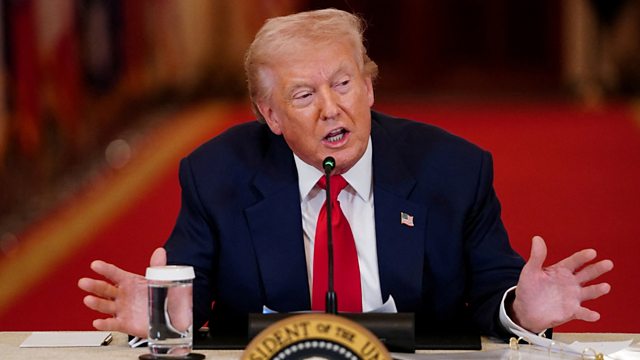
The United States government has stated that its military objectives in Iran could be accomplished within a period of four to six weeks. Officials from the White House say the campaign has clear goals, although they have not publicly disclosed the exact details of those targets. According to the administration, the operation is intended to weaken Iran’s military capabilities and reduce threats to the United States and its allies in the region.
White House Press Secretary Karoline Leavitt said that once these objectives are achieved, Iran would effectively find itself in a position similar to unconditional surrender, regardless of whether its leadership officially declares it. She explained that the primary aim of the operation is to limit Iran’s ability to carry out activities that the United States believes could endanger regional and international security.
As the conflict continues, civilians across the Middle East are experiencing the consequences of the growing tension. Many people in Iran are dealing with the uncertainty and challenges that come with wartime conditions. Concerns about safety, economic hardship, and disruptions to everyday life have become part of daily reality for many residents.
The situation has also affected neighboring countries. In Lebanon, tensions have increased as Israel carries out attacks targeting Hezbollah. In Beirut, some civilians have reportedly moved to coastal areas, hoping to find safer places as military activity continues nearby. The rising instability has raised fears of a broader conflict in the region.
In addition to the humanitarian and security concerns, the conflict is also creating economic effects around the world. Global markets have responded to the tension in the Middle East, especially in the energy sector. Uncertainty surrounding oil supply routes and regional stability has contributed to an increase in fuel prices, placing additional pressure on economies in different parts of the world.
At the same time, political developments in the Americas have drawn international attention. After United States troops reportedly helped remove Venezuelan leader Nicolas Maduro from power, President Donald Trump suggested that Cuba could be another focus of American policy in the future. His comments have led to speculation about possible political changes in the region.
Meanwhile, thousands of people gathered in the United States to honor civil rights leader Jesse Jackson during a memorial service attended by several prominent figures, including three former U.S. presidents. The event recognized Jackson’s long-standing role in advocating for equality, civil rights, and social justice.
These developments reflect a period of significant global tension and political change. Conflicts in the Middle East, shifting political dynamics in the Americas, and the remembrance of influential historical figures all illustrate the complex nature of current international affairs.