
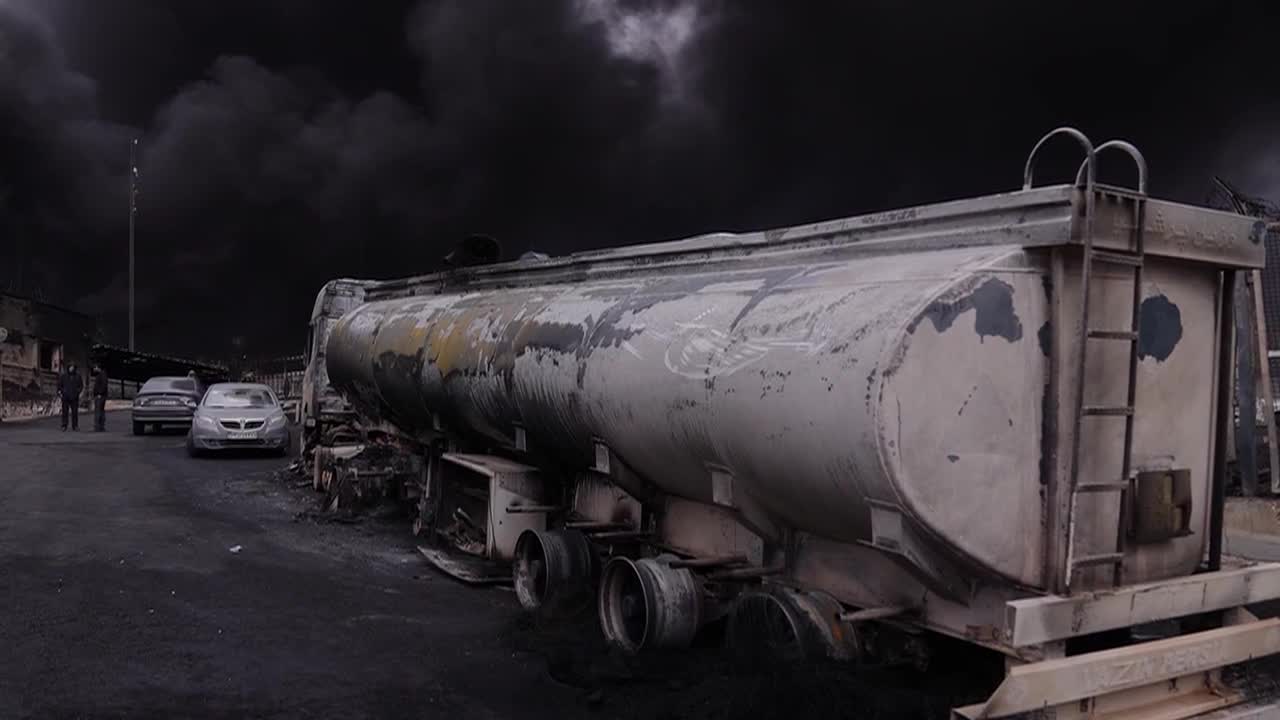
Global oil prices rose above $100 per barrel on Sunday for the first time in four years, reflecting growing concern about instability in the Middle East. The increase follows escalating military tensions involving the United States, Israel, and Iran. Despite the sudden rise in energy prices, U.S. President Donald Trump downplayed the development and said in a message on Truth Social that oil prices would eventually fall quickly.
The rise in oil prices comes shortly after Iran announced the appointment of a new Supreme Leader. Ayatollah Seyed Mojtaba Khamenei, the son of the late Ayatollah Ali Khamenei, has been selected to lead the Islamic Republic. The decision was made by Iran’s 88-member Assembly of Experts, the body responsible for choosing the country’s highest political and religious authority. The selection followed several days of uncertainty after the former leader was killed in U.S. and Israeli strikes during the early stage of the ongoing conflict.
Meanwhile, the United States military confirmed that another American service member has died as a result of the conflict, bringing the total number of U.S. military deaths to seven. According to the Pentagon, the service member passed away on Saturday from injuries sustained during an Iranian attack that occurred on March 1 in Saudi Arabia.
U.S. Central Command stated that Iranian forces have been launching ballistic missile and drone attacks across various parts of the region. Military officials said some of these strikes were carried out from heavily populated areas in central and western Iran, which they claim places civilians at risk and increases the possibility that densely populated locations could become military targets.
It remains unclear whether these developments will lead to a more aggressive wave of American strikes against Iran. However, President Trump indicated that additional targets are being considered. In a statement made on Saturday, he warned that locations not previously included in military plans could now face complete destruction if the conflict continues to escalate.
Several Gulf countries have also reported new Iranian attacks. Saudi Arabia, the United Arab Emirates, Bahrain, Qatar, and Kuwait all reported missile or drone strikes extending into Sunday, raising concerns that the conflict could expand further across the region.
At the same time, the United States government denied involvement in an attack on a girls’ elementary school that reportedly resulted in the deaths of at least 165 people. President Trump and Defense Secretary Pete Hegseth both rejected accusations linking American forces to the incident.
Despite ongoing hostilities, President Trump stated that the joint U.S.-Israeli military campaign launched more than a week earlier had significantly weakened Iran’s military capabilities. He said the operation had severely damaged Iran’s strategic capacity.
Iranian officials have strongly criticized the attacks. A senior Iranian figure, Ali Larijani, warned that the United States would eventually face consequences for continuing airstrikes on Iranian territory. However, President Trump dismissed these warnings.
Iranian state media has reported additional strikes targeting oil facilities near Tehran and military-related sites in the city of Isfahan, an area associated with Iran’s nuclear program. These attacks highlight the continued focus on strategic energy and nuclear infrastructure during the conflict.
In addition to the fighting involving Iran, Israel carried out new military strikes in Lebanon early Sunday, indicating that tensions are also rising in neighboring areas connected to the broader regional confrontation.
The combination of military escalation, political uncertainty in Iran, and attacks on energy infrastructure has increased global concerns about stability in the Middle East. Rising oil prices reflect fears that prolonged conflict could disrupt major supply routes and impact the global energy market.