
The conflict in the Middle East continues to intensify after Iran reported that its key nuclear facility at Natanz nuclear facility was struck during coordinated attacks by United States and Israel.
According to Iranian sources, the strike targeted the uranium enrichment site, though authorities stated there was no radioactive leakage. This was supported by the International Atomic Energy Agency, which confirmed that no increase in radiation levels had been detected outside the facility. The agency urged all sides to exercise restraint to avoid the risk of a nuclear disaster.
In response, Iran launched two intermediate-range ballistic missiles toward the Diego Garcia, a strategic military installation jointly operated by the US and the UK. Although the missiles failed to hit their target, the move marked a significant escalation, as it was the first time Iran used such long-range weapons beyond the immediate Middle East region.
Amid these developments, Donald Trump indicated that he was considering reducing military engagement in the region. However, this statement contrasted with ongoing actions by the United States to deploy additional troops and warships, signaling a complex and uncertain strategy.
Trump also warned that the US could target Kharg Island, a critical hub for Iran’s oil exports. His comments came as global oil prices surged, climbing above $119 per barrel, largely due to disruptions linked to the conflict.
A major flashpoint remains the Strait of Hormuz, a narrow passage through which roughly 20% of the world’s oil supply typically flows. Iran’s blockade of the strait has heightened global economic concerns, while Trump criticized NATO allies for not participating more actively in efforts to secure the route.
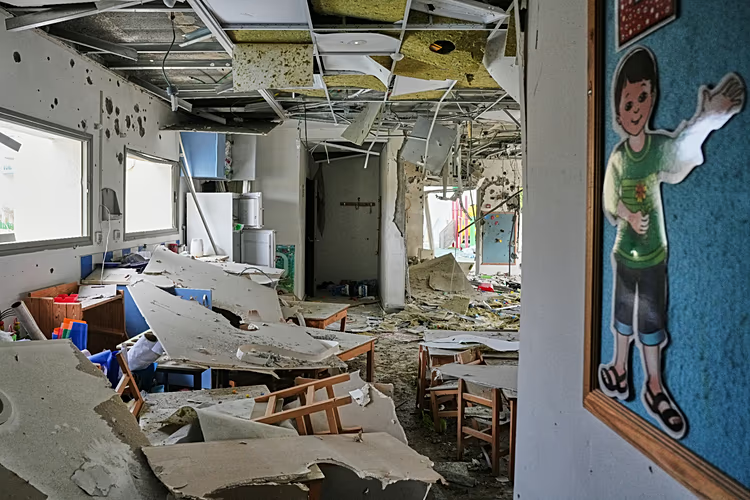
The conflict has also expanded geographically. Tehran experienced continued airstrikes, while Beirut was targeted in operations aimed at weakening Hezbollah. Meanwhile, in Israel, missile debris from Iranian attacks struck civilian infrastructure, including a kindergarten, though no casualties were reported.
Iran has also intensified strikes on energy infrastructure across the Gulf region. Facilities such as South Pars gas field and Ras Laffan have been affected, alongside attacks on oil installations in Kuwait and Saudi Arabia. These developments have disrupted energy supplies and contributed to volatility in global markets.
As the war enters its fourth week, there are few signs of de-escalation. Both sides continue to exchange threats, with Iranian officials warning of broader retaliatory measures, while Israel and the United States maintain pressure through military operations.
The ongoing conflict underscores the growing risk of a wider regional war, with potential global consequences for security, energy markets, and international stability.