
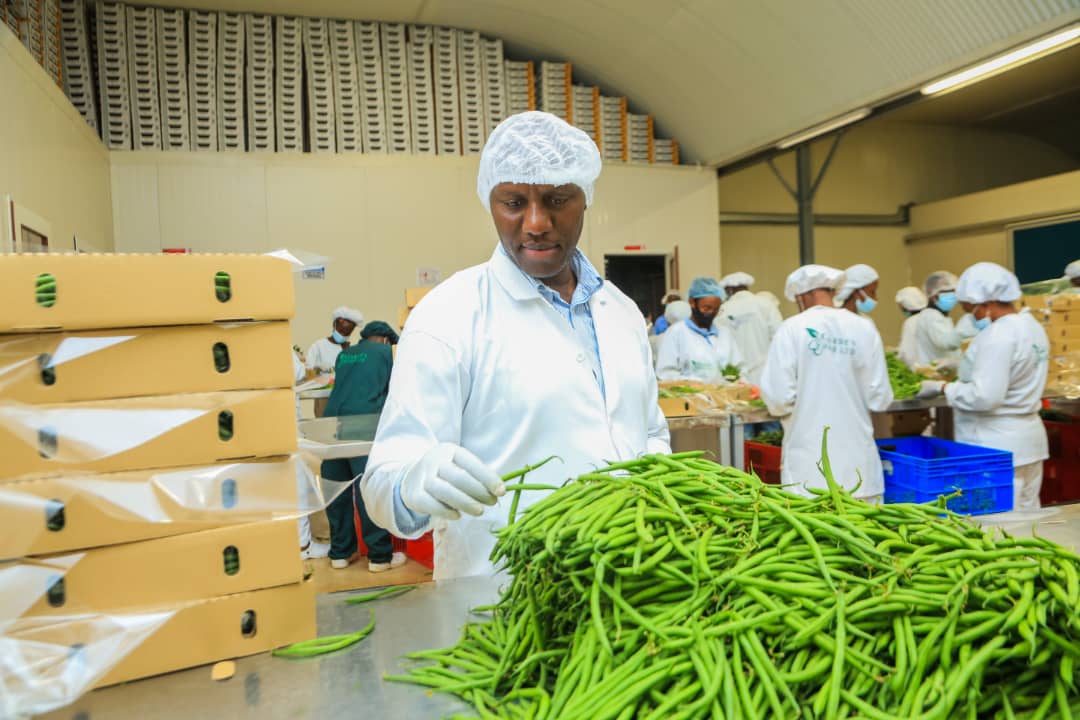
Rwanda is set to take a major step forward in modernizing agricultural trade with the construction of a large-scale, modern fruit and vegetable wholesale market in Kigali. The project, led by the National Agricultural Export Development Board (NAEB), is expected to cost more than FRW 77 billion, equivalent to over USD 53 million, and aims to transform the way fresh produce is traded locally, regionally, and internationally.
The planned facility, known as the Kigali Wholesale Market for Fresh Produce (KWMFP), will be a state-of-the-art infrastructure designed specifically for wholesale trading of fruits and vegetables. Its main objective is to improve efficiency, transparency, food safety, and quality standards across the entire fresh produce value chain. Once completed, the market will meet national, regional, and international requirements, making Rwanda’s agricultural products more competitive on global markets.
According to NAEB, the new market will operate with reliable service systems that prioritize food safety, traceability of produce, and quality control. It is also expected to strengthen the national system for handling fresh produce, including harvesting, storage, transportation, and distribution. By addressing long-standing structural challenges, KWMFP will help reduce losses and increase value for farmers and traders alike.
The market will be constructed in the Masoro Industrial Zone in Gasabo District, where the Government of Rwanda has already secured 10.8 hectares of land for the project. NAEB’s Director General, Claude Bizimana, informed members of Parliament that preparations for the project are at an advanced stage, particularly the relocation and compensation of residents affected by the development.
He confirmed that 99 percent of the resettlement process has been completed, with only one remaining case related to land ownership issues, which the City of Kigali and partner banks are currently resolving. Funds for compensation, he emphasized, are already available.
The total cost of the KWMFP project is estimated at USD 53.4 million. Half of the funding will be provided by the Government of Rwanda through a loan obtained from the OPEC Fund for International Development, which supports projects related to climate resilience and sanitation. The remaining 50 percent will come from an international investment institution based in the Netherlands. NAEB expects partnership agreements to be finalized by February 2026, paving the way for construction to begin shortly afterward.
The project seeks to address several critical challenges currently affecting wholesale trade of fresh produce in Kigali. Existing markets are poorly organized, overcrowded, and lack adequate hygiene standards. Price transparency is limited, and farmers often suffer losses due to inefficient market structures. Statistics from NAEB show that about 86 percent of wholesale fruit and vegetable trade passes through Nyabugogo, an area that is not designed to function as a major wholesale market and lacks proper systems for quality control, sanitation, and traceability.
Due to weak market information systems, intermediaries capture up to 70 percent of the final value of produce, leaving farmers especially small-scale producers with minimal profit. Post-harvest losses are also alarmingly high, reaching up to 40 percent annually, largely because of inadequate storage and modern transport facilities. These challenges reduce product quality and prevent Rwandan produce from meeting the standards required for export markets, high-end hotels, and international restaurants.

NAEB believes the Kigali Wholesale Market for Fresh Produce will solve these problems by providing modern infrastructure, transparent pricing mechanisms, and improved logistics. Ultimately, the project is expected to empower farmers, protect consumers, reduce post-harvest losses, and position Kigali as a regional hub for high-quality fresh produce trade.