

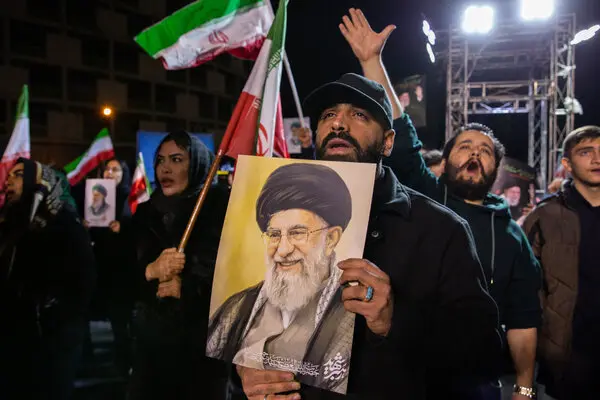
Iran is entering a new and uncertain political chapter following the killing of Supreme Leader Ayatollah Ali Khamenei during the early phase of the ongoing conflict involving the United States and Israel against the Islamic Republic. As the country moves to choose a successor, analysts believe that the next leader may not hold the same level of authority that previous supreme leaders once exercised. Iran’s semi-official Mehr News Agency reported that the country’s 88-member Assembly of Experts, the body responsible for selecting the supreme leader, has already chosen a replacement after several days of uncertainty.
The decision comes at a critical moment for the nation, which is facing war and intense political pressure both internally and externally. The process of selecting a supreme leader has occurred only once before in the history of the Islamic Republic. In 1989, Ayatollah Ali Khamenei was chosen to replace the founder of the Islamic Republic, Ayatollah Ruhollah Khomeini, who had led the country for a decade following the revolution that overthrew Iran’s Western-aligned monarchy.
Over the years, however, Iran’s political system based on the doctrine of Velayat-e Faqih, or Guardianship of the Islamic Jurist, has gradually evolved. Instead of power being concentrated entirely in one individual, authority has increasingly been shared among several powerful institutions. These include the Islamic Revolutionary Guard Corps (IRGC), intelligence agencies, and other influential political and economic groups.
Experts say this gradual shift toward a more collective structure of power was already happening before Khamenei’s death. According to analysts who study Iranian politics, the Islamic Republic had been slowly developing a system in which decision-making was distributed across interconnected networks rather than resting solely in the hands of a single leader. Khamenei’s death during wartime may accelerate this transformation.
In moments of crisis, institutions that control military power, intelligence, and security operations tend to gain greater influence. As a result, organizations such as the IRGC and the country’s security apparatus are expected to play an even larger role in shaping Iran’s future political direction. Although the position of supreme leader is unlikely to disappear because of its deep religious and political significance, some experts believe the office may become less dominant in practice.
Instead of one individual exercising overwhelming authority, leadership could become more collective and bureaucratic, with major decisions influenced by several institutions working together. So far, no official announcement has been made regarding the identity of the new supreme leader. However, discussions within Iran’s political and religious circles suggest that several prominent figures are being considered.
The Assembly of Experts, whose members are themselves vetted by the powerful Guardian Council, is responsible for finalizing the decision. Among the names most frequently mentioned is Mojtaba Khamenei, one of the late leader’s sons. His proximity to the former supreme leader and his alleged connections with parts of the security establishment have made him a significant figure in the succession debate.
Some observers believe he represents continuity during a time of war and instability. At the same time, Mojtaba Khamenei faces certain challenges. Traditionally, a supreme leader is expected to hold the religious status of marja al-taqlid, meaning a senior cleric who serves as a source of religious guidance for followers.
Mojtaba has not yet reached that level, although similar obstacles were overcome when his father was elevated to the position decades ago. Another issue surrounding Mojtaba’s potential leadership is political acceptance. Some members of the Iranian establishment worry that his appointment could create the impression of a dynastic transfer of power, which might increase tensions within the clerical and political system.
Other figures have also been mentioned as possible successors. One of them is Ayatollah Alireza Arafi, a senior cleric who currently serves on the three-person Interim Leadership Council formed after Khamenei’s death. Arafi is generally viewed as a strong supporter of the conservative faction within Iran’s political establishment.
There have also been reports suggesting support for former President Hassan Rouhani, who is associated with the reformist camp and was responsible for signing the 2015 nuclear agreement with world powers. Rouhani’s supporters argue that his leadership experience and diplomatic background could help stabilize the country during a difficult period. Beyond the succession debate, several powerful institutions within Iran are also trying to influence the country’s future direction.
The Islamic Revolutionary Guard Corps is considered one of the most influential actors. More than just a military force, the IRGC has extensive political, economic, and security interests throughout the country. Analysts believe the current instability could allow the IRGC to strengthen its role in governing the country.
Rather than staging a direct takeover, the organization may push for a system where power is shared among multiple institutions while maintaining the appearance of traditional clerical leadership. Another important player is Iran’s conventional military, known as the Artesh. Although historically overshadowed by the IRGC, the Artesh has gradually gained importance, especially as the country faces growing military threats.
While it is unlikely to take a leading political role, the military could act as a balancing force within the power structure. Reformist and pragmatic political factions also remain active, though their influence is more limited. These groups are generally focused on managing the crisis, reducing internal tensions, and seeking ways to lower international pressure through diplomatic engagement.
Ultimately, whoever becomes Iran’s next supreme leader will have to navigate a complex political environment shaped by competing institutions, powerful military organizations, and the pressures of an ongoing conflict. The position may still carry immense symbolic and religious significance, but its practical authority could be shared more widely than in the past. Some experts believe the new leader might initially act more as a ceremonial figure, while real decision-making power is exercised by a network of political and security institutions.
Over time, however, the balance of power could shift depending on how the new leadership manages alliances within the system. Iran’s leadership transition therefore comes at a moment of extraordinary uncertainty. The country faces external conflict, internal political rivalry, and the challenge of preserving stability in a rapidly changing regional environment.
How these forces shape the next phase of the Islamic Republic will determine whether the new supreme leader truly holds supreme authority or becomes part of a broader system of shared power. or becomes part of a broader system of shared power.